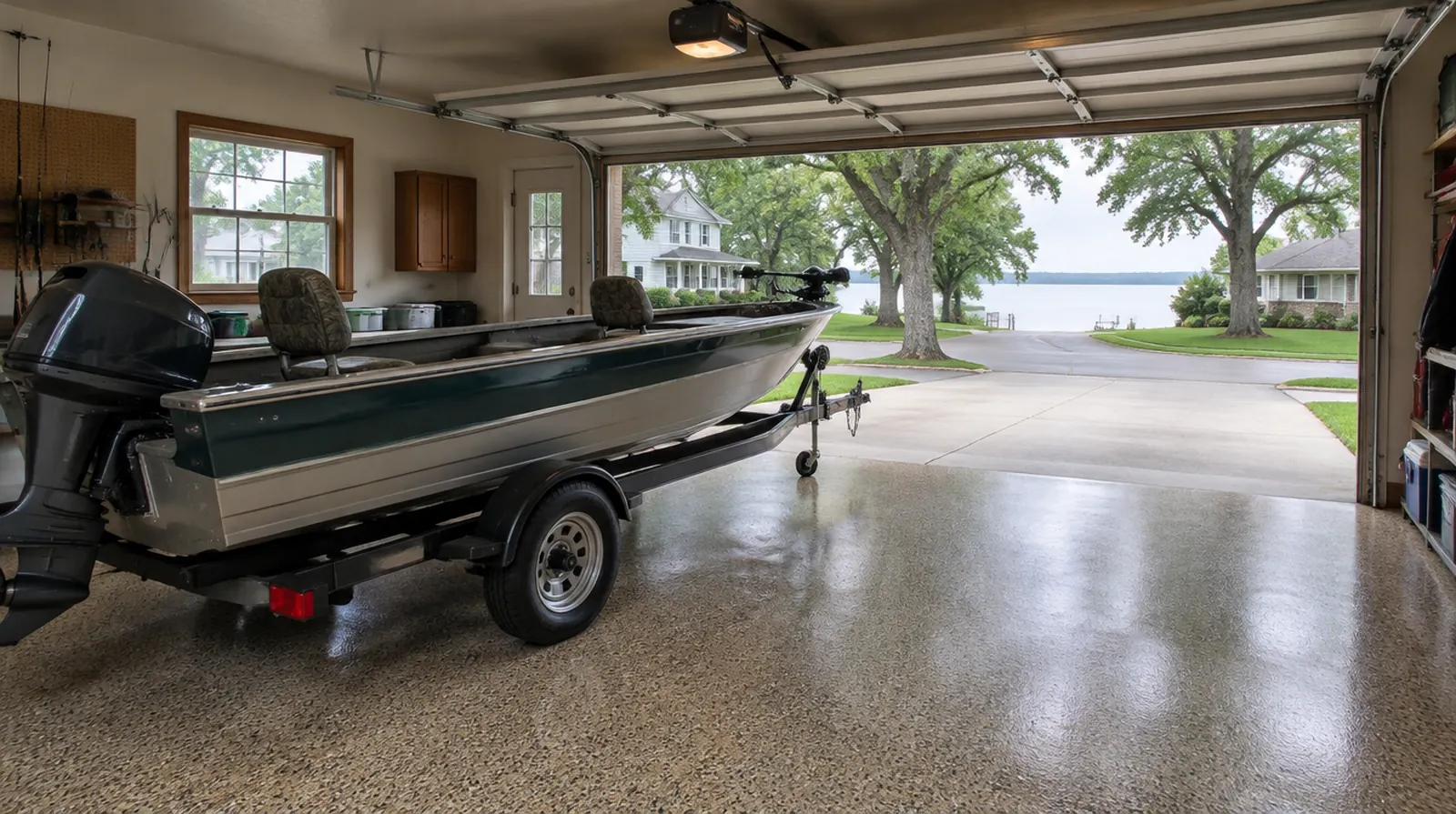
Why floors here wear out faster than they should
A garage in this city lives a busy life. In January it holds a truck that drags in slush and brine every trip. In February it may hold an ice shanty, an auger and a snowmobile that drips as it thaws. By May the boat is getting prepped, and by July the space doubles as a workshop with the door open to humid lake air. All of that water, salt and grit lands on bare concrete, and bare concrete soaks it up like a sponge.
Once salty water gets into the pores of a slab and freezes, the surface starts to scale. You see it as rough, sandy patches by the door and under where the tires sit. Oil from trailers and mowers stains it, and spring humidity can leave older floors damp and dusty. A properly installed coating closes off the surface so water and salt sit on top, where a squeegee and a hose can send them out the door.
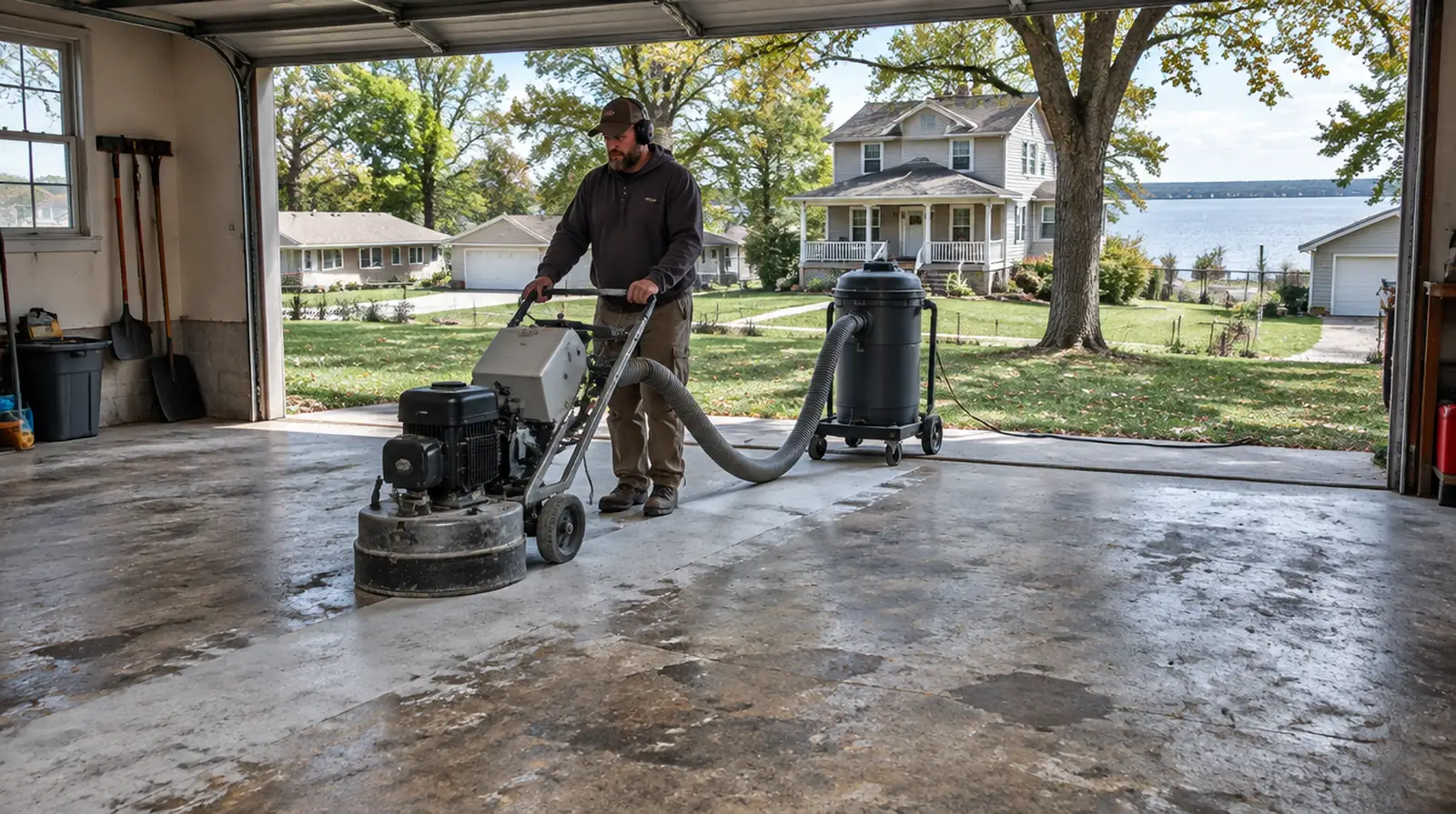
The key word is properly. Coatings fail when they are rolled over dirty, sealed or weak concrete. That is why our work starts with a grinder and a moisture meter, not a paint roller.
How an install goes
First we visit and look at the floor. We note old paint, sealer, oil soaked areas, cracks and scaled spots, and we take moisture readings, which matters in basements and older garages built close to the water table. You get a written quote that spells out the prep, the system and the timeline.
On install day we diamond grind the entire slab with dust-controlled equipment. Grinding removes weak surface paste, salt residue and contaminants and leaves a texture the coating can grip. We patch scaled areas with repair mortar, fill cracks and grind those repairs flat. Then the coating system goes down: primer or base coat, broadcast flake or quartz if you want texture, and a durable topcoat. We clean up and walk the floor with you before we leave.
Floor systems we install
Not every floor needs the same thing. Here is what we offer and where each one makes sense:
- Garage floor epoxy for a tough, easy to clean surface in attached and detached garages.
- Epoxy flake flooring for texture, traction and a finish that hides dirt between cleanings.
- Polyaspartic floor coating for a fast return to service and a UV-stable finish when the door stays open all summer.
- Metallic epoxy flooring for basements, man caves and showrooms that deserve a showpiece.
- Commercial epoxy flooring for shops, plants, marine service bays and warehouses.
- Polished concrete for offices, retail spaces and modern homes.
- Epoxy floor repair for coatings that are peeling, lifting or worn through.
- Concrete sealing for patios, walks, steps and slabs that need protection without a full coating.
- Driveway coating for driveways and aprons that take a beating from plows and salt.
- Epoxy countertops for bars, kitchens and cabin-style rec rooms.
Built for boats, trailers and toys
Many homeowners we talk to are storing more than a car. Boat trailers, ATVs and snowmobiles are heavy and often sit for months on the same spot. Trailer tongue jacks and kickstands put point loads on the floor, and outboard motors drip oil and lake water. We recommend a thicker build and a textured topcoat in those garages, and we will point out where a full flake floor will hide the inevitable scuffs better than a solid color.
If you use your garage as a shop, mention it at the estimate. Welding sparks, dropped tools and chemicals all affect which topcoat we suggest. We would rather spend a few extra minutes talking about how you use the space than install a floor that is wrong for it.
Basements that feel finished
Plenty of homes here have basements that started as storage and slowly became a family room, a workout space or a place to watch the game. Painted basement floors tend to peel because of moisture moving up through the slab. We test first. If moisture levels are high, we use a moisture-tolerant primer before the decorative layers. A basement coating is warmer looking than bare concrete, easy to mop and simple to pair with area rugs.
Timing and weather
Cold slabs slow down cure times. In winter we check the concrete temperature, and in an unheated garage we may suggest polyaspartic, which cures in colder conditions than standard epoxy. In summer, humidity off the lake can affect some products, so we time our coats around the weather. Most residential garages are finished in one to two days, and you can usually walk on the floor within hours and park on it within a few days.
What sets our work apart
We only do concrete floors. That focus means our crew knows the details: how far to grind, when to use a moisture barrier, how much flake to broadcast, how to cut in around drains and door tracks. Our quotes include all prep so the price does not grow on install day. We protect walls and doorways, keep dust under control and leave the space clean.
We also tell you when a coating is not the best choice. If your slab is heaving, badly cracked or holding too much water, we will say so and explain your options. Sometimes a penetrating sealer is the smarter buy.
Care after the install
Coated floors are low maintenance. Sweep or blow off grit, squeegee out meltwater in winter and wash with a mild cleaner when needed. Put a mat under kickstands and trailer jacks if you want to avoid scuffs. Avoid harsh solvents on decorative finishes. We give you written care tips at the final walkthrough.
Common questions
How long does an epoxy garage floor last?
On a well-prepared slab with a quality topcoat, many floors last well over a decade in normal residential use.
Can you coat a garage that has had a boat parked on it for years?
Yes. Oil and fuel stains are ground and cleaned, and heavily soaked spots can be treated before coating.
Do you work in winter?
Yes. We measure slab temperature and choose products that cure in the conditions we find.
Will the floor be slippery when wet?
We add slip-resistant grit to the topcoat, and flake floors offer even more texture.
Get a quote
Tell us about your garage, basement or shop and we will set up a visit. The quote is free, it is in writing and it includes everything your floor needs. Contact us to get started.
Request a free floor quote
Call (920) 289-4844 for a free estimate.