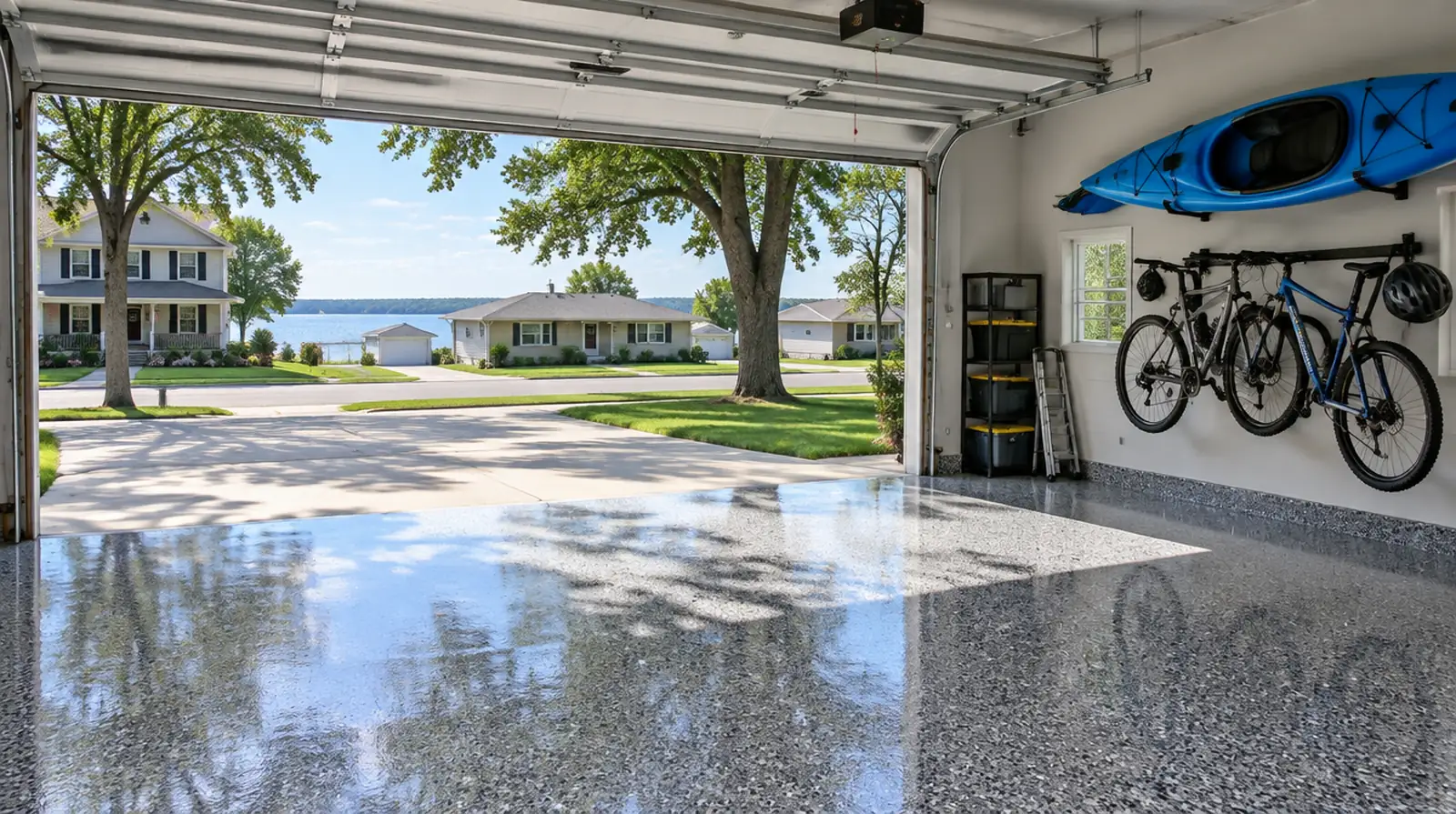
What polyaspartic is
Polyaspartic is a type of polyurea coating. It bonds strongly to properly prepared concrete, cures in hours rather than days and does not yellow when exposed to sunlight. It is often used as a topcoat over epoxy or as a complete system with a polyaspartic base, flake and clear coat.
Why homeowners here choose it
Speed. Many polyaspartic garages are finished in a single day, and you can park on them sooner than with most epoxy systems. That matters when the garage holds your only shelter from snow.
Cold tolerance. Standard epoxy needs warmer slab temperatures to cure properly. Polyaspartic can cure in colder conditions, which widens the install window in shoulder seasons and in unheated detached garages.
Sunlight. If your garage door stays open on summer weekends while you work on the boat or the bikes, UV light hits the floor for hours. Some epoxies yellow over time in direct sun. Polyaspartic stays clear.
Durability
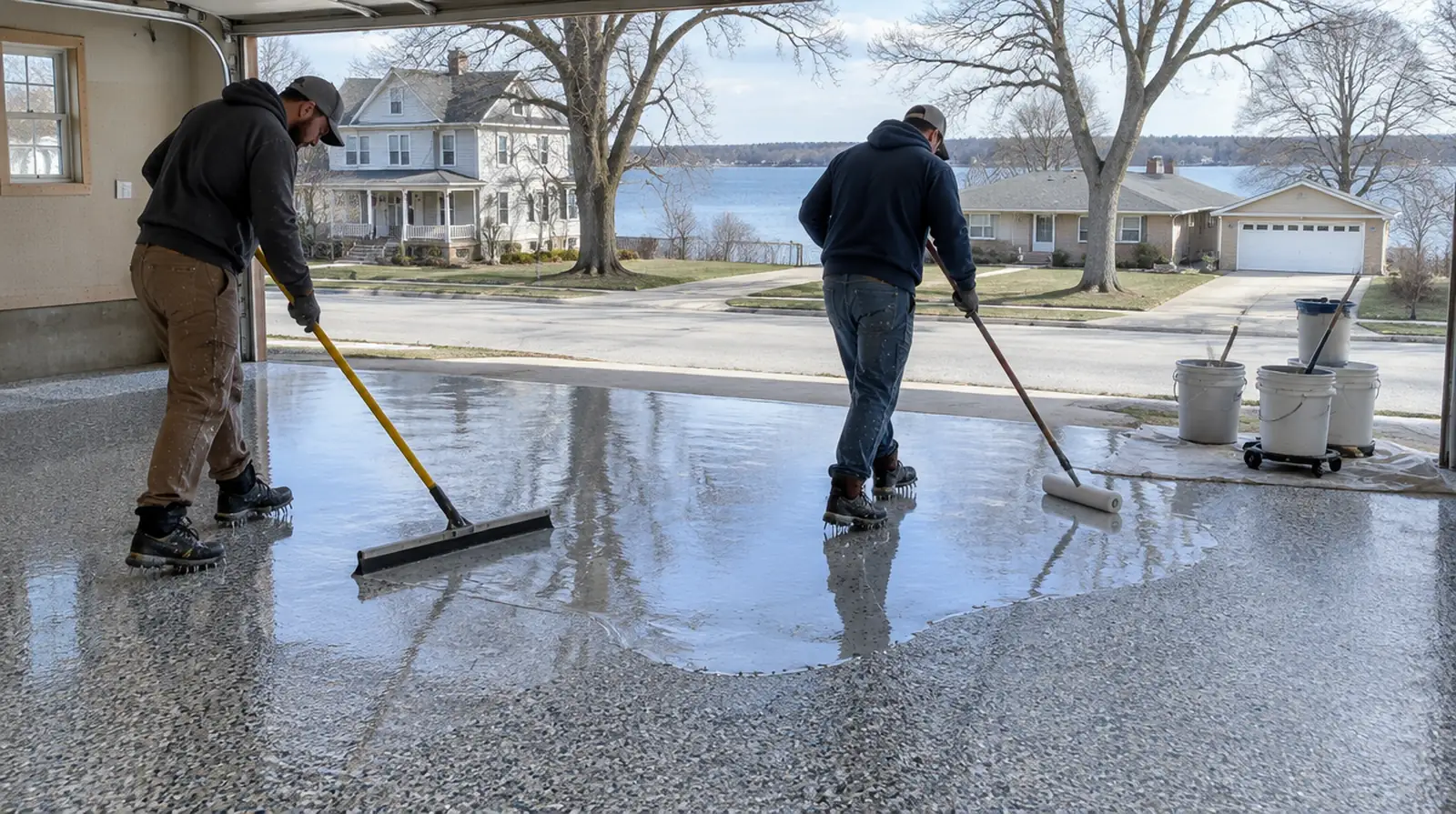
Polyaspartic topcoats resist abrasion, chemicals, oil, fuel and hot tires. They are harder to scratch than many epoxies, which makes them a good choice for garages with trailers, jacks and heavy foot traffic. Paired with full broadcast flake, they create a very tough floor.
Prep still matters
Fast curing does not mean shortcuts. Because polyaspartic bonds quickly, the slab must be ground properly and completely clean before the first coat. We diamond grind, repair cracks and scaling, vacuum thoroughly and test moisture. Prep usually takes as long as the coating.
Working fast
Polyaspartic has a short working time. That is why it is a crew job, not a weekend project. We mix in small batches and work in sections so every coat goes down evenly. This is one reason do-it-yourself kits rarely match a professional result.
System options
- Epoxy base with polyaspartic topcoat: combines epoxy's thick build with polyaspartic's UV resistance.
- All-polyaspartic flake system: fastest option, often finished in one day.
- Clear polyaspartic sealer over concrete: a lighter option for slabs that need protection without color.
Where we use it
Residential garages, detached garages without heat, pole buildings, marine and small engine shops, car washes, showrooms and anywhere the floor needs to be back in service quickly. For decorative indoor floors, we sometimes pair it with metallic epoxy as a protective clear coat.
Cost considerations
Polyaspartic material costs more than basic epoxy, but the faster schedule can offset some of that. For many homeowners the shorter downtime and color stability are worth it. We will price both options so you can compare.
A good fit for seasonal storage
Lake homeowners often want the garage done between pulling the boat in fall and the first big snow. That window is short. Because polyaspartic cures quickly and tolerates cooler slabs, we can often fit a full install into a single day and have the space ready for the boat, the sleds or the car within a day or so.
Can I park on it the next day?
In many cases, yes. We will confirm the timeline based on temperature and the specific products.
Is it better than epoxy?
It is different. Polyaspartic wins on speed and UV stability. Epoxy builds thickness at a lower cost. Many floors use both.
Can it go down in winter?
Often, yes, within the temperature range the product allows. We measure slab temperature on site.
Compare your options
Ask us for a quote that shows both polyaspartic and epoxy systems side by side. Get in touch.
to compare polyaspartic and epoxy for your floor.
Call (920) 289-4844 for a free estimate.