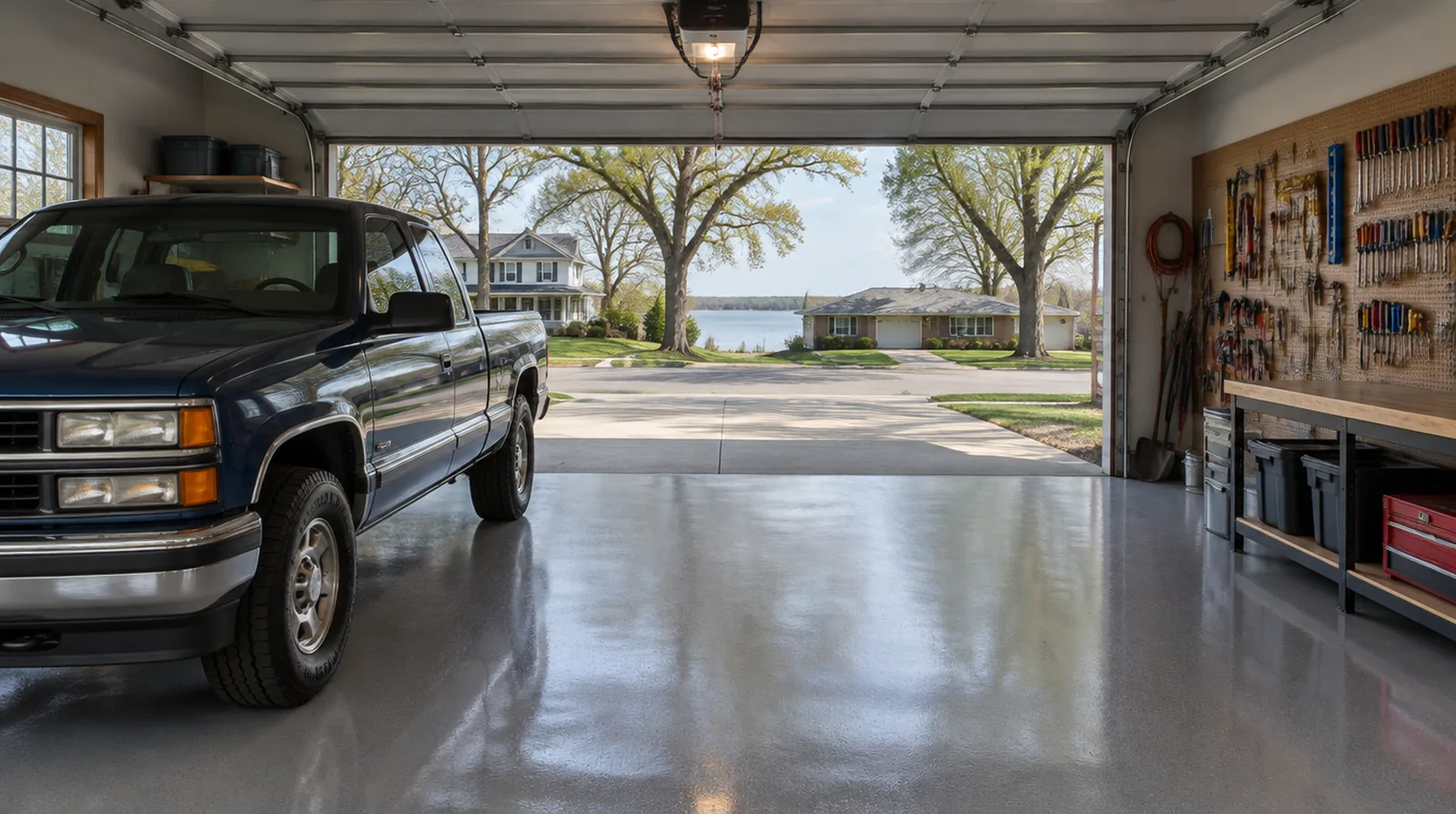
The problem with bare concrete
Concrete looks solid, but it is porous. Every time a truck pulls in carrying slush, salty water works into those pores. When the temperature drops, that water freezes and expands, and over a few winters the surface starts to scale and flake. Add oil drips from a trailer or a mower and you have a floor that is stained, dusty and rough. Garage floor epoxy closes off the surface so water, salt and oil stay on top where you can remove them.
Our installation process
We start with an inspection. We look for old paint and sealers, oil-soaked areas, cracks, scaled spots near the door and signs of moisture. Then we write a quote that includes all of the prep the slab needs.
On install day the entire floor is diamond ground with vacuum-connected equipment. This removes the weak top layer and contaminants and opens the pores so the epoxy can bond. Oil stains are treated, cracks are routed and filled, and scaled areas are patched and ground flush. We then apply a high-solids epoxy base coat, followed by a topcoat with grit for traction. If you want texture or a speckled look, we broadcast flake into the base coat.
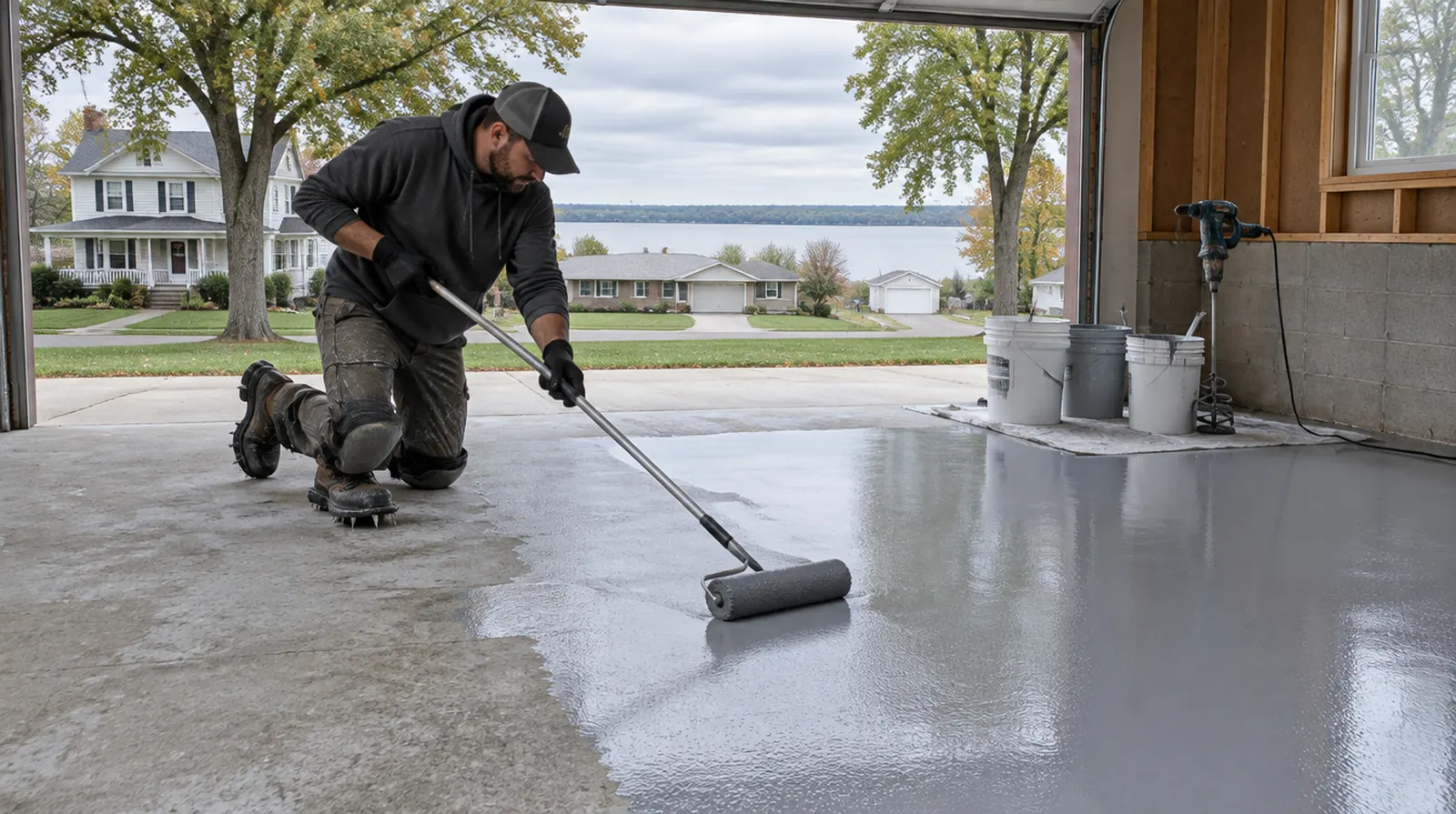
Choosing a system
Most homeowners choose one of three setups:
- Solid color epoxy with a clear, slip-resistant topcoat. Clean and simple.
- Epoxy with partial flake, which adds visual texture and hides some dirt.
- Full broadcast flake, the most forgiving look and the most traction. See our flake flooring page.
For the topcoat, we often recommend polyaspartic on garages where the door stays open in summer, because it does not yellow in sunlight the way some epoxies can.
Heavy loads and point loads
Boat trailers, campers and snowmobile trailers can sit in one spot for months. The tongue jack and tire contact points concentrate a lot of weight. We build those floors thicker and recommend a puck or plate under jacks and kickstands. Hot tires can lift cheap coatings, which is called hot tire pickup. A ground slab and a quality epoxy prevent that.
Detached and older garages
Many older homes here have detached garages with slabs that have settled, cracked or never had a vapor barrier. We take moisture readings, and if the numbers are high we use a moisture-tolerant primer. Large cracks are repaired and, where they are moving joints, honored with a flexible filler so the coating does not crack along them later.
Winter cleanup made easy
On a coated floor, meltwater pools instead of soaking in. A floor squeegee pushes it out the door in a minute. At the estimate we check the slope so we can tell you where water will run. Rinse salt off a few times each winter and the floor stays bright.
Cost factors
Price depends on the size of the garage, the condition of the slab, how much repair it needs and the system you choose. A slab with old paint takes longer to grind than a bare one. Deep scaling needs more patch material. We include all of that in your written quote so the price does not change on install day.
How long until I can use it?
Most garages take one to two days. You can walk on the floor within a day and park within several days, depending on the products and temperature. A polyaspartic topcoat can shorten that window.
Can you coat over existing paint?
No. Old paint and coatings are ground off so the new floor bonds directly to concrete.
Will the coating crack if the slab cracks?
Existing cracks are repaired before coating. New structural cracks can reflect through any coating, which is why we treat moving joints with flexible material.
Do I need to empty the garage?
Yes, the floor must be clear. If moving heavy items is a problem, let us know and we will discuss options.
Is the floor safe with a wet boat on it?
Yes. Water sits on top. Add grit or flake for extra traction where you walk around the boat.
Schedule an estimate
We will measure your garage, test the slab and give you a written price. The visit is free and there is no pressure to decide that day.
to book a free garage floor estimate.
Call (920) 289-4844 for a free estimate.